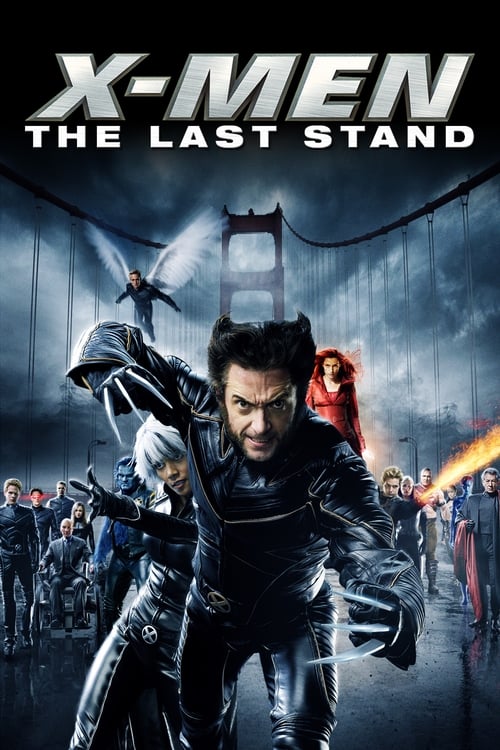
X2: X-Men United (2003) is a superhero film adapted from Marvel Comics, directed by Bryan Singer and starring Hugh Jackman and Patrick Stewart. The film is part of the X-Men Universe and was released by 20th Century Fox. Runtime: 2h 14m. Rated PG-13. Audience rating: 7.5/10.
What is X2: X-Men United (2003) about?
The X-Men must fight alongside Magneto's Brotherhood against the ruthless military scientist William Stryker, who plans to use an amplified mutant-detection device to destroy all mutants.
Released in 2003, X2: X-Men United was directed by Bryan Singer and produced under the 20th Century Fox banner. The film occupies a significant place within the X-Men Universe — contributing to the ongoing narrative and mythology of that cinematic universe.
The film features lead performances from Hugh Jackman, Patrick Stewart, Ian McKellen, among others, anchoring a story that adapts characters first brought to life in Marvel Comics. Its source material gives the film a foundation rooted in decades of published storytelling, which Singer and the creative team interpret through a cinematic lens.
With an audience rating of 7.5, X2: X-Men United is generally praised as a strong entry in the superhero genre — its strengths in storytelling, performance, and production design regularly cited by viewers.
What happens in X2: X-Men United (2003)? — Full Plot
The film opens with one of the most-celebrated sequences in 2000s superhero cinema: Nightcrawler (Alan Cumming, in heavy blue prosthetic makeup) — a German Catholic mutant teleporter — infiltrates the White House by teleporting through Secret Service security checkpoints. He moves through the West Wing in a series of blue-smoke teleportation flashes, killing or incapacitating every guard he encounters with a combination of teleport-strikes and acrobatic combat. He reaches the Oval Office. He nearly assassinates the President of the United States. He is restrained at the last possible moment by Secret Service agents who manage to disable his teleportation through a tranquilizer dart. The attempt is broadcast worldwide. America's already-tense mutant-rights debate explodes into national crisis.
The White House attack triggers a federal response. The U.S. government approves a clandestine mutant-suppression initiative led by William Stryker (Brian Cox) — an army general with a history of anti-mutant research dating back to the Vietnam era. Stryker has been quietly building a black-budget paramilitary force specifically designed to capture and study mutants. The White House attack gives him the political authorization to escalate. He immediately begins planning a coordinated assault on Charles Xavier's School for Gifted Youngsters in Westchester.
Cut to: the Xavier mansion. The X-Men — Storm (Halle Berry), Cyclops (James Marsden), Jean Gray (Famke Janssen), Wolverine (Hugh Jackman), and a now-teenage Rogue (Anna Paquin) — train in the Danger Room. Wolverine has been on a years-long personal investigation into his pre-1979 past; his amnesia from the original X-Men (2000) is starting to break. He has been finding fragmented references to Stryker's Alkali Lake Weapon X facility — a Cold War-era Canadian military research site where Logan was given his adamantium-bonded skeleton against his will. He has been planning to visit the site to investigate his own origins.
Charles Xavier and Cyclops travel to investigate the Nightcrawler attack via Cerebro. Charles attempts to telepathically locate the rogue mutant. The signal traces to a small Catholic chapel in Boston — Nightcrawler has been hiding in religious sanctuary, traumatized by the attack he doesn't remember performing. The film implies (correctly) that Nightcrawler had been brainwashed by Stryker. Charles and Cyclops travel to retrieve him. They are intercepted by Stryker's paramilitary force at the chapel and captured. The kidnapping triggers the broader X-Men crisis that drives the rest of the film.
Stryker's strike force attacks the Xavier mansion in the dead of night. The team is largely overwhelmed — the children of the school are evacuated by Storm and Iceman, while Wolverine engages Stryker's paramilitary unit in the kitchen and lower hallways. The Wolverine kitchen-fight sequence (where Logan kills four of Stryker's commandos with his claws while wearing only a wife-beater tank top) became one of the franchise's signature single moments. Wolverine is wounded but survives. Stryker's force retreats with Cyclops and Charles Xavier in captivity. The remaining X-Men — Storm, Jean, Wolverine, Iceman, Rogue, and a defected Pyro — flee in a stolen civilian vehicle with Nightcrawler (whom they intercepted en route).
The fleeing X-Men regroup at Bobby Drake's family home in Boston. The Drake family scene is one of the film's most-emotionally-substantive moments. Bobby's parents — who don't know their son is a mutant — react to the revelation with deeply complicated emotions. Bobby's brother calls the police, prompting the X-Men's pursuit. Pyro, during the ensuing confrontation, kills two responding police officers with his fire-mutation — his moral break from the X-Men begins here. The team flees Boston with the Drake police-attention now nationally broadcast.
Charles Xavier, captured by Stryker, has been drugged with a mutant-suppression serum. Stryker's son Jason — a brainwashed mutant whose mental state has been broken by years of Stryker's experimentation — provides telepathic-illusion support to Stryker's broader plan. Stryker intends to use Charles, connected to a Cerebro-equivalent machine called Dark Cerebro, to telepathically attack every mutant on Earth. The attack would kill them all simultaneously. The plan is genocidal in scope. Stryker views this as a humanitarian intervention; he sincerely believes mutants are an existential threat to humanity that must be eliminated before they become uncontrollable.
Magneto, having been broken out of his maximum-security prison cell by Mystique (who has infiltrated the prison disguised as one of the guards), makes an uneasy alliance with the X-Men against the common Stryker threat. The Magneto-X-Men team-up is the franchise's first major heroic-villain collaboration. Together, the combined team infiltrates Alkali Lake — the dam-and-reservoir Canadian facility where Logan was experimented on years earlier. The mission is approximately 35 minutes of choreographed-team action sequences.
Logan's flashback memories return throughout the Alkali Lake mission. He recalls being submerged in the adamantium-injection tank, his pre-Wolverine life as a man named Jimmy or 'Three' or some other coded identity. The flashback-sequences are filmed in a deliberately desaturated palette that visually differentiates them from the contemporary scenes. Stryker, captured during the assault on the facility, reveals to Logan that he was the surgeon who personally performed the adamantium implantation. The revelation is the franchise's first significant retconning of Wolverine's origin story.
Lady Deathstrike — Stryker's son's brainwashed adamantium-bonded mutant enforcer (Kelly Hu) — engages Wolverine in a particularly brutal hand-to-hand combat sequence. The fight is approximately 4 minutes of choreographed adamantium-versus-adamantium claw combat. Logan kills Lady Deathstrike by overdosing her with the adamantium-bonding serum. The sequence is widely cited as one of the franchise's most-physically-demanding fight sequences. Kelly Hu has stated that the choreography required 6 weeks of pre-production rehearsal.
The X-Men evacuate Charles from Stryker's Dark Cerebro machine. Magneto, having been quietly observing Stryker's plan, reverses Stryker's Cerebro programming — instead of killing all mutants, the reversed-programming will kill all non-mutants. The X-Men intercept and stop Magneto's intervention before it completes. The conflict between Magneto and the X-Men is brief but morally complex; Magneto's logic is genocidal but consistent with his ideological framework. Mystique extracts Magneto from the facility before the X-Men can capture him.
The Alkali Lake dam containing the facility's reservoir bursts during the final battle. The reservoir's collapse threatens to drown the entire X-Men team. Jean Gray, in the climactic sequence, uses her telekinetic abilities to telepathically hold back the floodwater long enough for the team to escape via the X-Jet. She cannot escape herself; she is too far from the X-Jet's launch position. She tells Logan and Cyclops to leave without her. They watch from a nearby hill as Jean Gray is consumed by the flood and the resulting explosion. Cyclops is destroyed by grief; Logan is silently devastated.
The film closes with Charles delivering a eulogy to the school's students at the rebuilt Westchester mansion. Stryker is dead — chained to a runway by Magneto as the flood overtakes him. Mystique has impersonated Senator Kelly to read the X-Men's case before the Senate; the false-Kelly testimony defuses the public mutant-extinction threat. The final shot is the rising glow of the Phoenix — Jean Gray's mutation has evolved into something more powerful — setting up X-Men: The Last Stand (2006). The Phoenix manifestation in the Alkali Lake water is brief but unmistakable.
Commercial and critical aftermath. X2: X-Men United grossed $407 million worldwide on a $110 million production budget — a significant commercial improvement over the original X-Men (2000)'s $296 million gross. The film was widely cited as the franchise's high-water mark for the next decade; critics praised Bryan Singer's directorial maturity, the deeper character development, and the philosophical complexity of the Magneto-X-Men alliance. The Rotten Tomatoes score was 87% — one of the highest single-film scores in the entire X-Men franchise. Bryan Singer's third X-Men film, The Last Stand (2006), was directed by Brett Ratner after Singer's departure for Superman Returns (2006).
Who stars in X2: X-Men United (2003)?
Find X2: X-Men United (2003) on Amazon
Watch X2: X-Men United on Prime Video, browse the original Marvel Comics source material, and discover Blu-rays, soundtracks, and related merchandise on Amazon.
As an Amazon Associate, I earn from qualifying purchases. Link clicks do not affect editorial coverage — see our disclaimer.
What are some facts about X2: X-Men United (2003)?
X2: X-Men United released in 2003, placing it within the 2000s era of comic book cinema — a decade that marked the modern superhero cinema revolution.
Directed by Bryan Singer, the film was produced by 20th Century Fox and adapts source material from Marvel Comics.
The principal cast features Hugh Jackman and Patrick Stewart, with key supporting roles played by Ian McKellen, Brian Cox, Alan Cumming.
The film belongs to X-Men Universe — 20th Century Fox's X-Men film franchise, now absorbed into the MCU multiverse.
X2: X-Men United carries an audience rating of 7.5 — putting it in the solid-to-excellent tier of the genre.
The Marvel Comics source material for X2: X-Men United has been in continuous publication for decades, giving filmmakers a rich well of storylines, character arcs, and iconography to draw upon.
Films from this era combined practical stunts with the rising CGI industry — many sequences would be impossible with either technology alone.
X2: X-Men United is catalogued on Movies on Comics among our collection of 164 comic book films spanning 48 years of cinema — from Richard Donner's 1978 Superman to the present day.
Easter Eggs & Hidden Details in X2: X-Men United (2003)
Bryan Singer's X2 is widely cited as the franchise's high-water mark. The deep cuts include Nightcrawler's celebrated opening sequence and Cerebro's retconned global-scale capabilities.
The opening Nightcrawler sequence — teleporting through Secret Service agents, evading the entire White House security apparatus — was widely cited as the most-effective opening of any X-Men film. The sequence combined practical stunt work with optical wire effects. It took five weeks to shoot.
Cerebro — the Xavier mansion's mutant-tracking device — was retconned from a simple psychic amplifier (as established in X-Men (2000)) into a global-scale instrument capable of telepathically reaching every mutant on Earth simultaneously. The expansion was a Bryan Singer creative choice that stuck for the rest of the franchise.
Jean Grey's apparent death at the Alkali Lake dam — sacrificing herself to give the team time to escape — directly set up the Phoenix Force arc that pays off in The Last Stand (2006). The final shot of the rising Phoenix glow became one of the franchise's most-discussed cliffhangers.
Brian Cox's William Stryker — a military scientist orchestrating mutant suppression — was widely cited as the franchise's most-restrained villain. Cox's commitment to playing Stryker as a calm, calculating institutionalist rather than a manic supervillain reframed the genre's antagonist template.
Logan's emerging memories of the Alkali Lake adamantium-bonding procedure was the franchise's deepest cut, foreshadowing X-Men Origins: Wolverine (2009) by six years. The setup was deliberate Singer planting.
Rogue's ability to absorb other mutants' powers — established in X-Men (2000) — was expanded in X2 when she absorbs Cyclops's optic blast. The expansion was widely cited as the film's most-creative character-power use.
Aaron Stanford's Pyro — the troubled student who joins Magneto in the climax — directly set up his major villain role in The Last Stand (2006). The character's arc was the franchise's first explicit student-becomes-villain trajectory.
The final shot — Phoenix's rising glow under Alkali Lake — was widely cited as the franchise's most-effective cliffhanger setup. The shot promised the Phoenix Saga that would dominate the next X-Men film.
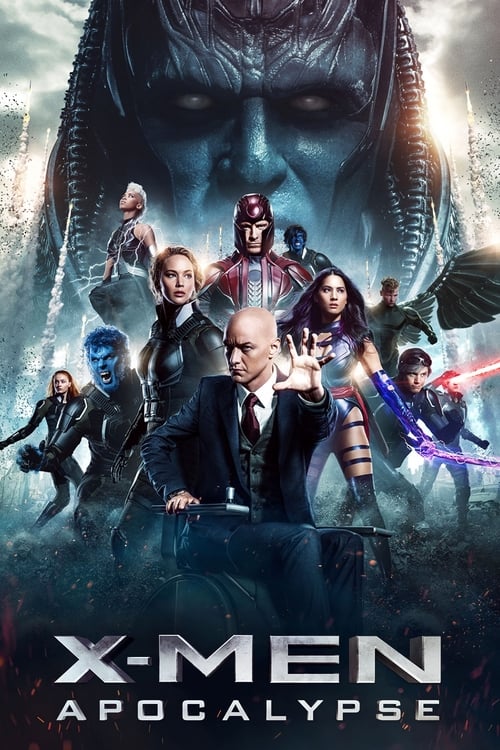
Alan Cumming's Nightcrawler became a franchise fan favorite but the character didn't return until X-Men: Apocalypse (2016) with a different actor (Kodi Smit-McPhee). The decision was Cumming's; he had reportedly been frustrated with the prosthetic-makeup demands.
X2 grossed $407 million globally on a $110 million budget — a significant improvement over the original. The film was widely cited as the franchise's high-water mark for the next decade.




💬 Reader Comments