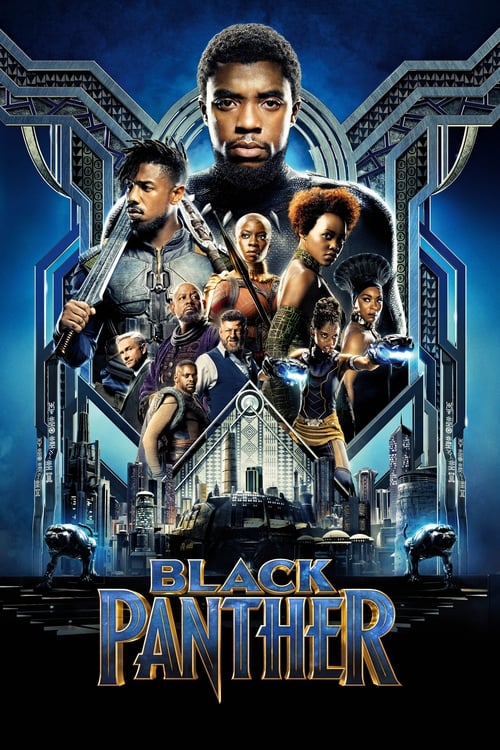
Black Panther (2018) is a superhero film adapted from Marvel Comics, directed by Ryan Coogler and starring Chadwick Boseman and Michael B. Jordan. The film is part of the MCU and was released by Marvel Studios. Runtime: 2h 14m. Rated PG-13. Audience rating: 7.3/10.
What is Black Panther (2018) about?
T'Challa returns home to the reclusive, technologically advanced nation of Wakanda to succeed to the throne as king and become Black Panther — but is challenged by a powerful enemy.
Released in 2018, Black Panther was directed by Ryan Coogler and produced under the Marvel Studios banner. The film occupies a significant place within the MCU — contributing to the ongoing narrative and mythology of that cinematic universe.
The film features lead performances from Chadwick Boseman, Michael B. Jordan, Lupita Nyong'o, among others, anchoring a story that adapts characters first brought to life in Marvel Comics. Its source material gives the film a foundation rooted in decades of published storytelling, which Coogler and the creative team interpret through a cinematic lens.
Its 7.3 rating reflects a film that divided audiences — appreciated for its ambition and spectacle by some, criticized for pacing and execution by others. Its place in the genre remains a frequent discussion point.
What happens in Black Panther (2018)? — Full Plot
Oakland, California, 1992. A Wakandan prince named N'Jobu — sent into the diaspora as an undercover spy years earlier and gone radical — is in his apartment teaching his young son the constellations through a homemade telescope. He has just smuggled vibranium out of Wakanda with the help of South African arms dealer Ulysses Klaue. He hears a Bifrost-like rumble outside. King T'Chaka — N'Jobu's older brother — appears in his living room with Zuri, a fellow operative. They've discovered the smuggling. They confront him. N'Jobu pulls a gun. T'Chaka pulls panther claws. The fight ends with the king's claws through his brother's chest. T'Chaka orders Zuri to bury the body and leave the boy behind in Oakland. The camera lifts up into the sky over the apartment block at sunset and the boy is still inside, alone, looking through a telescope at a country he doesn't know exists.
Twenty-six years later. Prince T'Challa, days from his coronation, picks up Nakia in the back of a Nigerian truck convoy where she's running undercover ops against Boko Haram. She kills a half-dozen kidnappers with combat blades before T'Challa drops his cloaking and helps her finish. The two of them rescue twelve schoolgirls and walk out. Nakia is reluctant to leave the work — her view of Wakanda is that it should be helping out here, not hiding — but she comes back with him for the coronation. Okoye, head of the Dora Milaje royal guard, is in the truck driver's seat. The whole sequence is shot like an Afrobeats spy film and the entire Wakandan future-tech is dropped into the audience's lap in three minutes without a single line of exposition.
Wakanda. Bashenga's Mountain. The five tribes — Border, Mining, River, Merchant, and the mountain Jabari — gather at Warrior Falls for the coronation. T'Challa's mother Queen Ramonda crowns him. Then the Jabari challenge — M'Baku, a mountain bull of a man in a wooden gorilla mask, descends from the cliffs with his men and challenges T'Challa to ritual combat without the herb's enhancement. The two of them fight in the spring above the falls with bone spears, M'Baku roaring like the Hanuman his people worship. T'Challa wins on a chokehold and lets M'Baku live. "Yield. Your people need you." M'Baku yields. T'Challa, crowned, drinks the heart-shaped herb tea and enters the ancestral plane on a savanna at sunset. His father T'Chaka, alive, in the spirit world, holds him. "A man who has not prepared his children for his own death has failed as a father." T'Challa wakes up the new king.
London, present day. The British Museum, African artifacts wing. A tall American man in a hoodie and sneakers is on a guided tour with a coffee cup in his hand. He asks the British curator about a vibranium-edged axe in the case in front of him. She gives him a dismissive lecture. He smiles. "How do you think your ancestors got these? You think they paid a fair price?" He drinks his poisoned coffee. The curator falls. Klaue and a four-man team burst into the gallery, smash the cases, and walk out with the axe. The hoodie man — Erik Stevens, USMC ex-Black Ops, codename Killmonger — walks out behind them. He's been Klaue's quiet inside man for months. The vibranium artifact is bait.
T'Challa hears about the museum job. Klaue is the man who killed his grandfather and who has been the regional reason for thirty years of border violence. He, Okoye, and Nakia travel to Busan, South Korea, where Klaue is selling the axe to undercover CIA buyer Everett Ross for $6M USD. T'Challa walks into the casino in a gold-trim jacket and a panther shawl and the auction breaks into a four-way firefight — Wakandans against Klaue's crew against Ross's agents — that spills out of the casino into a car chase through Busan's neon streets. Okoye breaks off her wig, drives a spear through a windshield, and surfs the hood of a moving sedan. Klaue, captured in person by T'Challa, is shipped to a CIA holding cell where Ross interrogates him while Wakandan extradition is being argued upstairs.
The holding cell is breached in three minutes by a tactical team led by Killmonger. He guns through six agents, takes a bullet to the shoulder shrugging it off, walks up to Klaue's cell, and shoots him point-blank in the chest. Ross dives in front of T'Challa during the breach and takes a vibranium-laced bullet to the spine. Killmonger walks out with Klaue's body in a duffel bag. T'Challa — angry that his nemesis is dead at the hand of an outsider, scared because the bullet that hit Ross was made of Wakandan vibranium — flies Ross back to Wakanda to save his life. He's bringing a CIA officer into the sealed city for the first time in five thousand years. The Council loses its mind.
Killmonger arrives at the Border Tribe checkpoint hours later carrying Klaue's body. W'Kabi — Okoye's husband, leader of the Border Tribe, the man who has waited his whole life for someone to bring him Klaue's corpse — escorts him into the throne room. Killmonger flips a Wakandan war ring out of his pocket, the same ring N'Jobu wore in Oakland. He pulls down his hoodie and shows the throne room ninety-six raised scars on his chest, one per confirmed kill in his career. He's N'Jadaka, son of Prince N'Jobu, born in Oakland, US Navy SEAL trained in JSOC, masters in international relations from Annapolis, PhD coursework at MIT, deployments in Iraq and Afghanistan and South Sudan, every name he's killed cut into his own skin. He invokes blood challenge for the throne.
Warrior Falls again. No herb-enhancement on either side this time. T'Challa is fighting an opponent who's been training for this combat since he was eight. Killmonger fights like a man who has nothing to lose and a list of grievances long enough to fill the river beneath them. He breaks T'Challa's spear. He throws him to the ground. He drives a blade through T'Challa's chest and over the edge of the falls. T'Chaka's son tumbles down through the spray into the river below and the camera holds on the empty stone as Killmonger raises the dripping blade to the watching tribes. The Border Tribe kneels. Killmonger is king. He drinks the heart-shaped herb. He visits N'Jobu in the ancestral plane — a small Oakland apartment, not a savanna — and his father weeps over what was lost. Killmonger does not. "Maybe your home is the one that's lost. That's why they can't find us." He orders the herb garden burned. No future king will have access to the herb without his blessing.
Nakia, Shuri, Ramonda, and Ross — who can't be brought to the conventional Wakandan hospital because of Killmonger's purge — flee on a hover-skiff to the Jabari mountains. M'Baku, on a snowy plateau, accepts them. He shows them T'Challa: alive, frozen in a cryo-pack of ice and snow, kept alive by Jabari herbalists since they fished him out of the river. Nakia gives him the last of the heart-shaped herb she stole on the way out. T'Challa wakes up in the ancestral plane and confronts his father one more time. This time he doesn't accept the answers. "You were wrong! All of you were wrong! To turn your backs on the rest of the world! We let the fear of our discovery stop us from doing what is right. No more!" He breaks the ancestral cycle. He wakes up with a different mission than the one he was crowned into.
The civil war is over by sundown. T'Challa flies in on his royal Talon ship and challenges Killmonger's claim. Border Tribe stays with Killmonger. Dora Milaje stays with T'Challa. Okoye looks her husband W'Kabi in the eye on the battlefield and refuses to stand down — "would you kill me, my love?" — and W'Kabi drops his weapon. The Jabari ride down from the mountains in an armored war column led by M'Baku and tip the balance. Ross, in a glass cockpit linked remotely to Shuri's lab, pilots a Wakandan fighter and shoots down two cargo planes full of vibranium weapons before they can leave the country to arm Killmonger's diaspora cells. Shuri leads the tech defense from her lab with her bracelet panther-cannons. T'Challa and Killmonger fight one last time inside the vibranium mining facility — a hand-to-hand brawl on a magnetic-suspension mineral-cart track sliding through a kilometer of underground rail. T'Challa drives a Panther claw through Killmonger's stomach and pins him to the wall.
The film ends in Oakland again. T'Challa and Shuri land a cloaked Wakandan ship in the same basketball court outside the apartment where N'Jobu died. The neighborhood kids spill out of the projects and stare. T'Challa announces that Wakanda is buying the apartment block, the surrounding lot, and a fifteen-block grid around it — building a Wakandan International Outreach Center on the site, the first of many. Shuri will run the science wing. Nakia will run the social wing. T'Challa walks up to a kid who looks the way Killmonger looked at the start of the movie and lets the boy touch the cloaked ship.
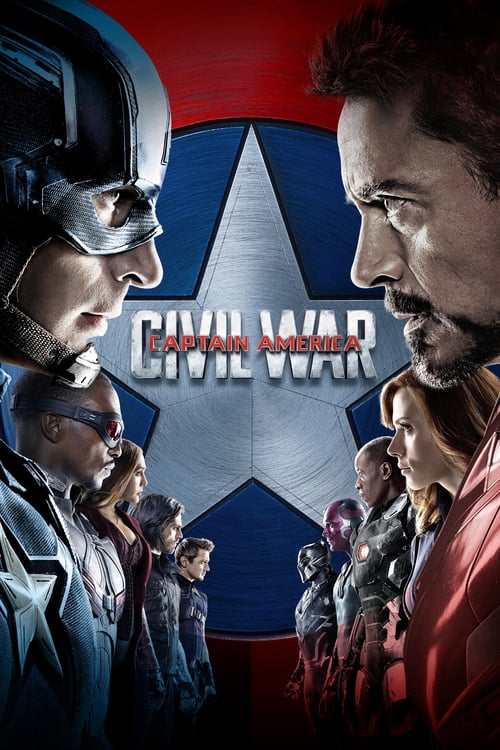
Mid-credits: the United Nations in Vienna. T'Challa is at the podium telling the assembly that Wakanda is no longer hidden. "For the first time in our history, we will be sharing our knowledge and resources with the outside world. Wakanda will no longer watch from the shadows." A delegate at the back asks "with all due respect, King T'Challa, what can a nation of farmers offer the rest of the world?" T'Challa just smiles. Cut to credits. Post-credits: a wooden hut on a hillside in the Wakandan plains. Children walking with goats see a white man with shoulder-length hair come out of the hut. They run to him and say "White Wolf." Bucky Barnes, now de-brainwashed by Shuri off-screen after the events of Civil War (2016), smiles. He's grafting his new vibranium arm onto his shoulder. The kid asks how it feels. "It's healing."
Who stars in Black Panther (2018)?
Find Black Panther (2018) on Amazon
Watch Black Panther on Prime Video, browse the original Marvel Comics source material, and discover Blu-rays, soundtracks, and related merchandise on Amazon.
As an Amazon Associate, I earn from qualifying purchases. Link clicks do not affect editorial coverage — see our disclaimer.
What are some facts about Black Panther (2018)?
Black Panther released in 2018, placing it within the 2010s era of comic book cinema — a decade that saw superhero films become the dominant force at the global box office.
Directed by Ryan Coogler, the film was produced by Marvel Studios and adapts source material from Marvel Comics.
The principal cast features Chadwick Boseman and Michael B. Jordan, with key supporting roles played by Lupita Nyong'o, Danai Gurira.
The film belongs to MCU — the Marvel Cinematic Universe — the highest-grossing film franchise of all time.
Black Panther carries an audience rating of 7.3 — putting it in the solid-to-excellent tier of the genre.
The Marvel Comics source material for Black Panther has been in continuous publication for decades, giving filmmakers a rich well of storylines, character arcs, and iconography to draw upon.
Modern superhero films like this one use a mix of practical effects and digital VFX, with entire sequences often shot against volume walls or LED stages pioneered by shows like The Mandalorian.
Black Panther is catalogued on Movies on Comics among our collection of 164 comic book films spanning 48 years of cinema — from Richard Donner's 1978 Superman to the present day.
Easter Eggs & Hidden Details in Black Panther (2018)
Ryan Coogler made a Shakespearean political drama set in a Black future. The film won three Oscars and became the first MCU film nominated for Best Picture. Its cultural footprint extends well beyond box office.
Black Panther became the first MCU film nominated for the Best Picture Oscar at the 2019 Academy Awards. It won three Oscars: Best Costume Design (Ruth E. Carter — first Black woman to win the category), Best Production Design (Hannah Beachler — first Black woman to win the category), and Best Original Score (Ludwig Göransson).
The film's opening folk-tale narration uses sand-animation — figures emerging from sifting sand — rather than the franchise's standard CGI prologue. The technique drew from West African storytelling traditions where elders would tell history by drawing in sand.
Erik Killmonger's body tattoos — each representing a kill — were a deliberate Coogler creative choice. The tattoos visualized the character's military discipline and grief. Michael B. Jordan's performance has been widely cited as the MCU's most-quoted villain.
Chadwick Boseman and the Wakandan cast improvised the war chants heard before the Border Tribe battle. Coogler told the cast to draw from their own family-cultural backgrounds. The chants became the film's most-iconic audio moment.
Stan Lee appears at the Busan casino as a gambler. He takes T'Challa's hard-won winnings, joking 'I'll just hold these for you.' The cameo was filmed in a single afternoon.
Erik's final line — 'Just bury me in the ocean with my ancestors that jumped from ships, 'cause they knew death was better than bondage' — directly references the historical Atlantic slave trade. The line was widely cited as the franchise's most-politically-explicit dialogue.
The opening sand-animation includes a brief audio sample of Martin Luther King Jr. speeches. The reference was Coogler's deliberate placement to anchor the film's political register in real Black-civil-rights history.
Ulysses Klaue — played by Andy Serkis — first appeared in Age of Ultron (2015). His return in Black Panther closed his arc and tied the cosmic-vibranium continuity together.
The Wakandan language spoken throughout the film was developed specifically for the production by linguist David J. Peterson (creator of Dothraki for Game of Thrones). The language is grammatically complete and continues to be referenced in subsequent MCU appearances.
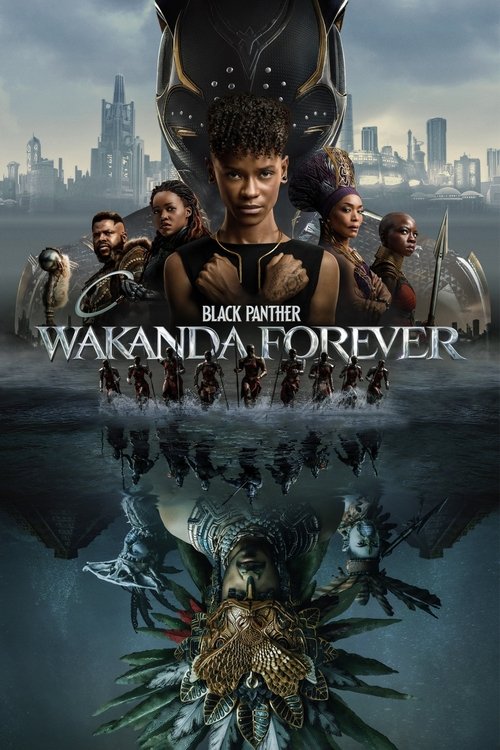
Chadwick Boseman's August 2020 death from colon cancer forced Marvel to reshape Black Panther: Wakanda Forever (2022) entirely. Coogler chose not to recast T'Challa. The film became a posthumous tribute.
💬 Reader Comments