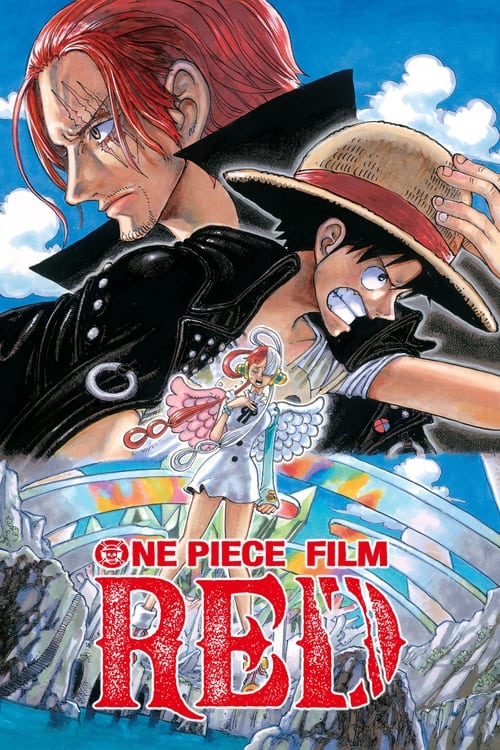
One Piece Film: Red (2022) is a Japanese-language superhero film adapted from Manga, directed by Goro Taniguchi and starring Mayumi Tanaka and Ikue Otani. The film is a standalone production outside any shared cinematic universe and was released by Toei Animation. Audience rating: 7.3/10.
What is One Piece Film: Red (2022) about?
The Straw Hat Pirates attend a concert by Uta, the world's greatest diva and Shanks's daughter. But behind her beautiful voice lies a dark power that threatens the world. Based on Eiichiro Oda's manga.
Released in 2022, One Piece Film: Red was directed by Goro Taniguchi and produced under the Toei Animation banner. The film occupies a significant place within the Independent — telling a self-contained story outside of shared-continuity superhero franchises.
The film features lead performances from Mayumi Tanaka, Ikue Otani, Kazuya Nakai, among others, anchoring a story that adapts characters first brought to life in Manga. Its source material gives the film a foundation rooted in decades of published storytelling, which Taniguchi and the creative team interpret through a cinematic lens.
Its 7.3 rating reflects a film that divided audiences — appreciated for its ambition and spectacle by some, criticized for pacing and execution by others. Its place in the genre remains a frequent discussion point.
What happens in One Piece Film: Red (2022)? — Full Plot
On the Elegia island, the famous diva Uta (voiced by Kaori Nazuka) is preparing for the first live concert of her career. Uta's reputation is — she has been known only through recorded music broadcasts. Her concert is attended by millions through Den Den Mushi broadcasts (the One Piece franchise's snail-based communication technology). Among the audience: pirates, Marines, and ordinary civilians from across the world.
Monkey D. Luffy and the Straw Hat Pirates attend the concert. Luffy recognisizs Uta — she is his childhood friend from Foosha Village. The reveal provides dramatic weight; Uta is the daughter of Red Hair Shanks, Luffy's childhood mentor and one of the Four Emperors of the New World. Their childhood relationship is depicted in flashback throughout the film.
Uta's concert is revealed to be dual-purpose. She has been planning to use her Devil Fruit powers (the Sing-Sing no Mi, which allows her to trap people in a dream world she controls through song) to bring humanity into a peaceful dream world. Her motivation is rooted in trauma: she lost her people during a pirate attack on her childhood home, and she now believes the only way to achieve peace is by removing humans from the violent waking world.
The concert audience gradually becomes trapped in Uta's dream world. Most audience members welcome the experience — they describe it as more pleasant than reality. Luffy and the Straw Hat Pirates resist; they recognisiz that humans cannot truly live in a dream world without their physical bodies eventually dying. Their resistance is the franchise's primary moral conflict.
Luffy and his crew battle through Uta's dream world to reach her physical body. They are joined by Trafalgar D. Water Law and Eustass Kid (other major franchise pirates) and even Marine Admiral Aokiji (who has retired from the Marines but remains a powerful figure). The unusual cross-faction alliance highlights the threat Uta's plan represents to the entire One Piece world.
Uta's connection to her father Shanks is revealed in detail. She blames Shanks for her people's death — he had been visiting her village when pirates attacked, and she believes he could have prevented the massacre. Her anger at Shanks drives her commitment to creating a world where pirates do not exist. The reveal provides emotional weight to her antagonist arc.
Shanks arrives at Elegia to confront Uta personally. Their reunion is the franchise's primary emotional moment; Shanks's commitment to his daughter despite their estrangement provides dramatic catharsis. Luffy works with Shanks to defeat the song-based threat; the combined Luffy-Shanks combat sequence is praised as one of the film's most cinematically composed action moments.
Uta is ultimately defeated through a combination of Luffy's persistence and Shanks's emotional appeal. The dream world is dispersed; the trapped audience returns to consciousness. Uta survives but her relationship with Shanks remains complicated. The film's epilogue shows Luffy and his crew returning to the open ocean, their adventure complete. Uta's eventual fate is left ambiguous, leaving room for potential future franchise appearances.
Who stars in One Piece Film: Red (2022)?
Find One Piece Film: Red (2022) on Amazon
Watch One Piece Film: Red on Prime Video, browse the original Manga source material, and discover Blu-rays, soundtracks, and related merchandise on Amazon.
As an Amazon Associate, I earn from qualifying purchases. Link clicks do not affect editorial coverage — see our disclaimer.
What are some facts about One Piece Film: Red (2022)?
One Piece Film: Red released in 2022, placing it within the 2020s era of comic book cinema — a decade that saw superhero films become the dominant force at the global box office.
Directed by Goro Taniguchi, the film was produced by Toei Animation and adapts source material from Manga.
The principal cast features Mayumi Tanaka and Ikue Otani, with key supporting roles played by Kazuya Nakai, Yuriko Yamaguchi.
The film belongs to Independent — an independent / standalone production, not tied to a shared cinematic universe.
One Piece Film: Red carries an audience rating of 7.3 — putting it in the solid-to-excellent tier of the genre.
The Manga source material for One Piece Film: Red has been in continuous publication for decades, giving filmmakers a rich well of storylines, character arcs, and iconography to draw upon.
Modern superhero films like this one use a mix of practical effects and digital VFX, with entire sequences often shot against volume walls or LED stages pioneered by shows like The Mandalorian.
One Piece Film: Red is catalogued on Movies on Comics among our collection of 164 comic book films spanning 48 years of cinema — from Richard Donner's 1978 Superman to the present day.
💬 Reader Comments