
Joker: Folie a Deux (2024) is a superhero film adapted from DC Comics, directed by Todd Phillips and starring Joaquin Phoenix and Lady Gaga. The film is a standalone production outside any shared cinematic universe and was released by Warner Bros.. Audience rating: 5.2/10.
What is Joker: Folie a Deux (2024) about?
Arthur Fleck, awaiting trial in Arkham State Hospital for his crimes as the Joker, encounters Lee Quinzel — a fellow inmate whose obsession with him sparks a romance set to song, leading them both into a shared, ruinous folie a deux.
Released in 2024, Joker: Folie a Deux was directed by Todd Phillips and produced under the Warner Bros. banner. The film occupies a significant place within the Independent — telling a self-contained story outside of shared-continuity superhero franchises.
The film features lead performances from Joaquin Phoenix, Lady Gaga, Brendan Gleeson, among others, anchoring a story that adapts characters first brought to life in DC Comics. Its source material gives the film a foundation rooted in decades of published storytelling, which Phillips and the creative team interpret through a cinematic lens.
The film's 5.2 audience rating indicates a mixed response. Even so, it holds interest as part of the broader Independent catalogue and for how it fits into the lineage of DC Comics-based cinema.
What happens in Joker: Folie a Deux (2024)? — Full Plot
Two years after the events of the first film, Arthur Fleck (Joaquin Phoenix) is being held at Arkham State Hospital awaiting trial for the five murders he committed during his rampage through Gotham — including the on-air shooting of late-night host Murray Franklin. He is gaunt, medicated, and openly mocked by orderlies, and the once-electric Joker persona that radicalised a city has shrunk back into the timid, soft-voiced man who lived with his mother. Arthur is plainly being kept on a maintenance dose of antipsychotics to dull him for trial, and his old fantasies — the dancing, the imagined girlfriend, the imagined success — have been replaced by silence and small humiliations.
A sympathetic guard (Brendan Gleeson) recognisizs that Arthur is, on his bad days, more victim than monster, and arranges a small kindness: a transfer for one hour a week into the lower-security wing where Arkham runs a music-therapy choir for patients with less violent histories. There, in a sun-yellowed room full of plastic chairs and an off-tune piano, Arthur meets Lee Quinzel (Lady Gaga), a wide-eyed inmate who claims to be from a working-class Gotham family that lived in his old apartment building. Lee tells Arthur she watched the Murray Franklin episode obsessively as a teenager, that she set her own family's apartment on fire because the Joker showed her how to laugh, and that everything Arthur thinks is broken about himself is the most beautiful thing in the world.
Lee's affection unlocks the part of Arthur that has been chemically buried for two years. He hides his medication, sneaks her notes, sings duets with her during therapy — and as he stops swallowing pills, the film begins to fracture into musical fantasy. Whenever Arthur and Lee touch, the world snaps into a Vincente Minnelli-style soundstage. They tap-dance on top of Arkham's roof, croon 'For Once in My Life' on a TV variety stage, twirl through a courtroom that has been swapped for a Technicolor cabaret. The film never fully commits to whether these numbers are shared hallucinations, Arthur's solo daydreams, or symbolic flashes — but it is clear that for Arthur, the songs are the only place where he is loved and the only place where he is finally Joker again.
The musical interludes punctuate the film's spine, which is Arthur's televised murder trial. Public defender Maryanne Stewart (Catherine Keener) builds a defense around dissociative identity disorder: she argues that Arthur Fleck is mentally ill, that Joker is a separate alter spawned by abuse and neglect, and that the man who shot Murray Franklin is no more legally responsible than the man who curled up in his mother's lap. The District Attorney, Harvey Dent (Harry Lawtey, in his first significant role in the film), counters with a methodical reconstruction of the killings — laying out Penny Fleck's adoption papers, the asylum records, and Murray's last broadcast — to argue that Arthur knew exactly what he was doing and revelled in it.
Outside the courthouse, a cult has formed. Hundreds of clown-masked supporters chant Arthur's name, wave hand-painted Joker placards, and treat the trial as a national referendum on Gotham's class divide. Lee, granted parole midway through the trial because her crimes were comparatively minor, becomes the public face of this movement — appearing on talk shows, leaking trial transcripts, and pushing Arthur to abandon the 'I have a disorder' defense and instead embrace Joker on the stand as a political statement. Arthur, who is increasingly intoxicated by the cheering crowds, fires his lawyer, dismisses the diminished-capacity defense, and announces to the courtroom that there is no Arthur Fleck — only Joker.
Self-representing and dressed in Joker make-up, Arthur tries to give the courtroom what they came for. He humiliates witnesses, plays to the cameras, and turns his cross-examination of an old colleague into stand-up. But Gary, the man Arthur spared in the original film because he was 'always nice to me,' takes the stand. He looks Arthur in the eye and tells the court that he is afraid every day, that Arthur is not a symbol and not a hero, just a man who killed people. Gary leaves the stand sobbing, and the cheering crowd outside the courtroom suddenly seems very far away. The illusion that Joker is a liberation movement collapses inside Arthur's own head.
Then the bombs detonate. A Joker-cult member parks a car bomb outside the courthouse to free Arthur. The blast kills several people, including parts of the prosecution team, and a clown-masked rioter spirits Arthur away in the chaos. For the briefest moment the film flirts with becoming the Joker origin story the audience has been waiting for: Arthur stumbles down a smoking Gotham street to applause, framed exactly like the iconic stair sequence from the first film. He sees Lee in the crowd — pregnant, ecstatic, screaming his name — and the music swells.
Arthur stops. He looks at Lee, at the strangers chanting for him, at the body of the bailiff under the rubble, and he keeps walking. He does not embrace her. He does not lead the riot. He turns himself back in. In the back of the police van, alone with a sympathetic guard, he confesses quietly that he was never Joker — that he is just a sick, scared man named Arthur Fleck — and that whatever it was that the city wanted him to become, he is not it. The next time we see Lee, she is alone in her apartment singing 'That's Life' to herself, the camera holding on her face long enough to make it clear that the dream of folie à deux is one-sided now.
Arthur dies in the corridor, alone. The screen cuts to black on a final, half-laughed apology and the sound of the unnamed inmate's giggling. The film's last image is the carved smile spreading across the new patient's face — a transmission, not a coronation. Folie à Deux ends not as a Joker origin story, but as the story of a man who failed his own legend and the franchise's polite, formal refusal to give the audience the supervillain it kept demanding. Critics split bitterly over whether this is brave deconstruction or hostile contempt, but Phillips's intent is unmistakable: the cult of Joker is the disease, and Arthur Fleck was always its first, most pitiable patient — never its prophet.
Who stars in Joker: Folie a Deux (2024)?
Find Joker: Folie a Deux (2024) on Amazon
Watch Joker: Folie a Deux on Prime Video, browse the original DC Comics source material, and discover Blu-rays, soundtracks, and related merchandise on Amazon.
As an Amazon Associate, I earn from qualifying purchases. Link clicks do not affect editorial coverage — see our disclaimer.
What are some facts about Joker: Folie a Deux (2024)?
Joker: Folie a Deux released in 2024, placing it within the 2020s era of comic book cinema — a decade that saw superhero films become the dominant force at the global box office.
Directed by Todd Phillips, the film was produced by Warner Bros. and adapts source material from DC Comics.
The principal cast features Joaquin Phoenix and Lady Gaga, with key supporting roles played by Brendan Gleeson, Catherine Keener.
The film belongs to Independent — an independent / standalone production, not tied to a shared cinematic universe.
Joker: Folie a Deux carries an audience rating of 5.2 — a mixed reception that highlights the divisive nature of superhero film adaptations.
The DC Comics source material for Joker: Folie a Deux has been in continuous publication for decades, giving filmmakers a rich well of storylines, character arcs, and iconography to draw upon.
Modern superhero films like this one use a mix of practical effects and digital VFX, with entire sequences often shot against volume walls or LED stages pioneered by shows like The Mandalorian.
Joker: Folie a Deux is catalogued on Movies on Comics among our collection of 164 comic book films spanning 48 years of cinema — from Richard Donner's 1978 Superman to the present day.
Easter Eggs & Hidden Details in Joker: Folie a Deux (2024)
Todd Phillips's musical sequel is denser with Batman-comics references than the first film — most of them quiet, most of them rewarded only on re-watch. The film deliberately works as both a closing chapter to Arthur Fleck's story and a soft handoff to a larger Gotham mythology.
Harry Lawtey's young prosecutor Harvey Dent is presented as a junior DA on his first major trial. The role is intentionally underplayed — viewers familiar with Batman's mythology immediately recognise the future Two-Face, but the film never references his eventual disfigurement. Phillips has said in interviews that this Dent is 'the same man who will one day be Two-Face,' connecting the universe to the broader Batman canon.
Lady Gaga's character Lee Quinzel is the film's reimagined version of Harleen Quinzel / Harley Quinn. The script deliberately strips Harley of her psychiatrist credentials — Lee is a patient, not a doctor — to mirror the working-class trajectory of Phillips's Joker universe. The change is consistent with the comics' alternate-universe Harley variants from the late 2010s.
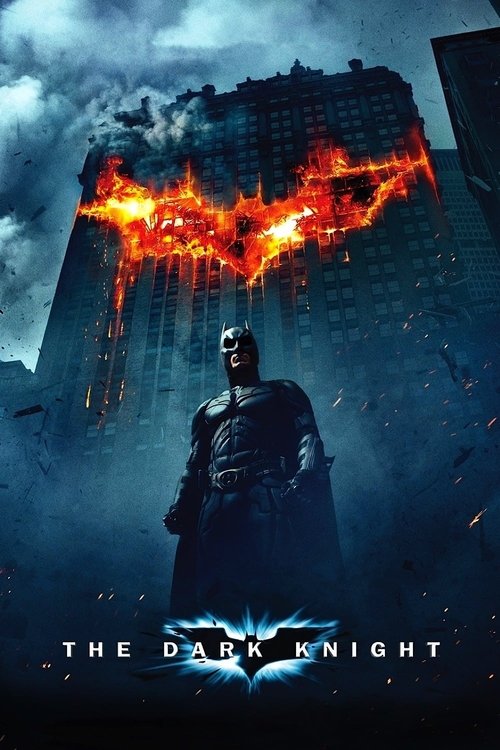
Brendan Gleeson's sympathetic Arkham guard is named Jackie Sullivan — a quiet tribute to actor Jackie Earle Haley, who played Rorschach in Watchmen (2009) and was a finalist to play the original Joker in Christopher Nolan's The Dark Knight before Heath Ledger was cast.
Every musical sequence in the film is staged with the production design of mid-century MGM musicals — specifically Vincente Minnelli's work from the late 1940s. Phillips has said the choice was deliberate: in his Joker universe, the cinema of the 1970s collapsed into the cinema of the 1940s, and Arthur's hallucinations reach for the most romantic film grammar he can imagine.
Frank Sinatra's recording of 'Smile' — written by Charlie Chaplin for Modern Times (1936) — is the only song from the first film that returns. It plays under Arthur and Lee's first kiss and again under Arthur's death scene at the end. Phillips uses it as a structural bookend, tying the two films into a single emotional arc.
The young unnamed inmate (Connor Storrie) who stabs Arthur to death in the final scene then carves a Glasgow smile into his own face — confirming on-screen that the Joker persona is transmissible and Arthur was never the 'real' Joker. Phillips has confirmed in interviews that the new patient is the version of Joker who will eventually fight Batman; he is a separate, younger man who took the idea of Joker from Arthur and made it his own.
The green wig Arthur wears during his courtroom appearances is, per the props department, the same physical wig from the original Joker (2019). Phillips has said in interviews that the wig was deliberately kept on hand for the sequel, in case Arthur returned to the Joker persona.
During the trial, a witness mentions seeing 'Cobblepot's boys' in the alley where one of Arthur's victims was found. This is the first reference to Oswald Cobblepot / The Penguin in the Phillips universe and connects the film loosely to the HBO Max Penguin series, which depicts a parallel Cobblepot organisation.
The car-bomb sequence outside the courthouse was filmed on location at the Bronx County Courthouse — the same building used for the famous 'staircase dance' scene at the end of the first Joker. Phillips deliberately revisited the location as a visual rhyme: Arthur's first triumph and his final escape happen at the same address.
Arkham State Hospital is depicted in this film using the abandoned Hawthorne Cedar Knolls campus in Westchester County, NY — a real former juvenile psychiatric institution that closed in 2015. The exterior shots are unmodified location photography, lending the film's Arkham a documentary-like authenticity rare in Batman adaptations.
💬 Reader Comments